
The Roots of Early Black Music - Before Hip Hop Existed
This discussion is going to look at how the art form known as Hip Hop, or Rap music was born, and its relevance to the modern day Hip Hop Culture. While many use the terms Hip Hop and Rap interchangeably, there is a difference. Rapping(MC-ing) is just one of the four essential elements of Hip Hop. The other three are DJ-ing, Breakin'(Break Dancing) and the art form known as Graffiti. While there are many theories about how Hip Hop originated, I will focus merely on the musical aspects, of MC-ing and DJ-ing. Perhaps the other two can also be explored by someone with in depth knowledge.
The story begins with us exploring the first Black person to ever record a song. He would also become the first Black artist to sell over a million copies, and tour the country as a star musician. His talents were discovered, recorded and exploited by a label by the name of Victor, the parent company of Columbia Records, an offshoot of RCA. They have evolved, changing names, buying out other labels, being bought out themselves, but they still exist today in some form or fashion. The recording artist was named George Johnson, and his first single dropped in 1891, just after the invention of the phonograph. He was the first Black person to ever be recorded on wax. The actions of his recording company would go on to set the stage for the horrible exploitation of Black music that has been taking place on a grand scale ever since. Click here to hear "The Whistling Coon".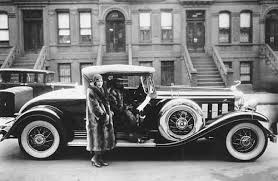
Years later, the world would get it's first listen to a rap song, though the term was not yet invented, so the record was actually billed as Gospel. The year was 1937, and another groundbreaking tune produced by a group called the Golden Gate Gospel Quartet hit the airwaves. It was the first rap song recorded by a group. It featured rhyming lyrics over a repetitious bassline. Click here to listen to "Preacher and the Bear". I don't know if it is just a coincidence that the rhyme scheme bears such a close resemblance to the first modern rap song to reach platinum status, "Rapper's Delight", by the Sugar Hill Gang. The latter, though nowadays widely ridiculed by hip hop purists as corny, would prove the commercial viability of Hip Hop Music. The New York scene would dominate the first decade of the art form, and would become known as it's birthplace. Are you beginning to see how all Black music is related in one way or another? Allow me more time to tie up more of the loose ends
This discussion is going to look at how the art form known as Hip Hop, or Rap music was born, and its relevance to the modern day Hip Hop Culture. While many use the terms Hip Hop and Rap interchangeably, there is a difference. Rapping(MC-ing) is just one of the four essential elements of Hip Hop. The other three are DJ-ing, Breakin'(Break Dancing) and the art form known as Graffiti. While there are many theories about how Hip Hop originated, I will focus merely on the musical aspects, of MC-ing and DJ-ing. Perhaps the other two can also be explored by someone with in depth knowledge.
The story begins with us exploring the first Black person to ever record a song. He would also become the first Black artist to sell over a million copies, and tour the country as a star musician. His talents were discovered, recorded and exploited by a label by the name of Victor, the parent company of Columbia Records, an offshoot of RCA. They have evolved, changing names, buying out other labels, being bought out themselves, but they still exist today in some form or fashion. The recording artist was named George Johnson, and his first single dropped in 1891, just after the invention of the phonograph. He was the first Black person to ever be recorded on wax. The actions of his recording company would go on to set the stage for the horrible exploitation of Black music that has been taking place on a grand scale ever since. Click here to hear "The Whistling Coon".
Years later, the world would get it's first listen to a rap song, though the term was not yet invented, so the record was actually billed as Gospel. The year was 1937, and another groundbreaking tune produced by a group called the Golden Gate Gospel Quartet hit the airwaves. It was the first rap song recorded by a group. It featured rhyming lyrics over a repetitious bassline. Click here to listen to "Preacher and the Bear". I don't know if it is just a coincidence that the rhyme scheme bears such a close resemblance to the first modern rap song to reach platinum status, "Rapper's Delight", by the Sugar Hill Gang. The latter, though nowadays widely ridiculed by hip hop purists as corny, would prove the commercial viability of Hip Hop Music. The New York scene would dominate the first decade of the art form, and would become known as it's birthplace. Are you beginning to see how all Black music is related in one way or another? Allow me more time to tie up more of the loose ends
The Social Conditions Just Prior to the Emergence of Hip Hop
 While the war in Vietnam was taking place, the social project of Affirmative Action was just starting to get underway. The men that did not go to war were the first "Guinea Pigs". There were countless numbers of Black men that got a piece of the pie and decided to run as far from their community as possible. At the same time, blue collar jobs like those in the factories were diminishing, due to the availability of cheap labor overseas, along with the fact that robots were starting to take the place of human workers in this country. Almost overnight, the middle class neighborhoods, where the Black community laid its head, turned into slums. This was not isolated to New York. All urban centers nationwide felt the effects. Many fathers either abandoned their families, got "lost" on drugs, became victims of Black on Black violence, or went to prison. This caused a shortage of men in the community. Enter the surrogate father of young Black males: Hip Hop.
 In the mid 70s, Black America was going through a great period of transition. Soldiers had just began returning from a war(Vietnam), and for the first time in the history of this country, veterans were not looked upon socially as heroes. Many Black servicemen found that they were not only discriminated against on the battlefield, but also once they returned home. Some Black were even ridiculed by members of their own race, who could not fathom why anyone Black would have gone to fight in the first place. Even though the draft was in full effect, there were quite a lot of Black men of fighting age that either fled to Canada, erased themselves from society, or simply refused to register. These were all out attempts to keep from going to war. Many also turned to Islam and other religious sects, in an attempt to draft the dodge. The influx of returning soldiers also brought back with it thousands of men who had developed a heroine or cocaine addiction in Vietnam. They returned to a community that looked very similar to the war torn country that they had just left, included many of their peers community who had also picked up their very own drug habit here at home.
The Modern Era of Hip Hop
Lets skip forward a few decades. For my discussion about Hip Hop, I will start off by hinting at my age without formally admitting to it. Let's just say that I was born under the same star alignment as the art form known as Hip Hop. In 2014 the music that I have had a love/hate relationship with over the course of my life, turned 40 years old. What seemed to appear from nowhere in the public parks of The Bronx(New York), has influenced all facets of society, even making its way into the ipods of nursing home residents(watered down versions, but Hip Hop nonetheless; check out "The Wobble"; my 60 year old mother knew about the song even before I did).
One of my earliest and fondest memories of Hip Hop is that of me as a young teen, having to wait until my parents were away before I could play Hip Hop. It was the first genre of music that I knew of to contain profanity, so I was naturally drawn to it. I tricked my parents into buying me a couple of records that they thought were harmless. They would have never done so if they knew the albums contained cursing. Back then, it was not widely known that some rap contained four letter words, and the industry had not yet begun placing "Explicit Lyrics", or "Parental Advisory" stickers on Hip Hop yet. The secret only lasted a few years though. I remember having to hide those newly printed albums from my parents. I will say, however, that the early artists did not curse just to be doing so, but mostly did it to drive a point across. I forgot to mention the fact that a few years prior to rap music being available in cassette tape format, it was only available on vinyl, which was even more difficult to conceal. Although I'm sure it does exist somewhere, you would still be hard pressed to find any form of the culture represented on 8 Track tapes, which were popular during the mid to late 70s. Musical technology has undergone many changes right alongside Hip Hop. Many would argue that the music itself influenced the change in musical formats in the first place. Tapes were much cheaper to produce than vinyl records, and boomboxes were becoming a must have, just like ipods and mp3 players are today.
The same way that the art form and platform have changed, so has the way in which it has been marketed and sold. Once its power was discovered, a way to capitalize on its monetary value had to be developed. I will get into that a little later.
One of my earliest and fondest memories of Hip Hop is that of me as a young teen, having to wait until my parents were away before I could play Hip Hop. It was the first genre of music that I knew of to contain profanity, so I was naturally drawn to it. I tricked my parents into buying me a couple of records that they thought were harmless. They would have never done so if they knew the albums contained cursing. Back then, it was not widely known that some rap contained four letter words, and the industry had not yet begun placing "Explicit Lyrics", or "Parental Advisory" stickers on Hip Hop yet. The secret only lasted a few years though. I remember having to hide those newly printed albums from my parents. I will say, however, that the early artists did not curse just to be doing so, but mostly did it to drive a point across. I forgot to mention the fact that a few years prior to rap music being available in cassette tape format, it was only available on vinyl, which was even more difficult to conceal. Although I'm sure it does exist somewhere, you would still be hard pressed to find any form of the culture represented on 8 Track tapes, which were popular during the mid to late 70s. Musical technology has undergone many changes right alongside Hip Hop. Many would argue that the music itself influenced the change in musical formats in the first place. Tapes were much cheaper to produce than vinyl records, and boomboxes were becoming a must have, just like ipods and mp3 players are today.
The same way that the art form and platform have changed, so has the way in which it has been marketed and sold. Once its power was discovered, a way to capitalize on its monetary value had to be developed. I will get into that a little later.
One of the earliest disc jockeys to come into prominence was DJ Kool Herc. In 1974, when he first started setting up shop at South River Park, a section of the Bronx that bears the same name, he was the first turn table artist that many teenagers of that era recall witnessing. He developed a style that used two turn tables, with the same record playing simultaneously. His craft involved isolating the drumline or breakbeats of each record, in a pattern that could be appreciated by the crowds. Modern rapping was not yet available on vinyl, so the records of choice would have been Disco, Soul, and Funk. Of the three genres mentioned, Funk would play the dominant role. One of the pioneers of Funk, The Godfather of Soul, James Brown, may also be the Godfather of Hip Hop. His "Funky Drummer", a beloved urban anthem, contains one of the most sampled breakbeats in the history of Hip Hop.
Reaganomics - The Crack Era and it's influence on Hip Hop (Just say no)
We cannot fully comprehend Hip Hop without discussing the contribution of the drug Crack Cocaine. This is neither glorification nor condemnation, but the cold hard truth. The first time I had ever heard of crack was by way of Hip Hop. Believe it or not, it was an anti-drug video by a legendary group known as Whodini. The song was "Growing Up" and featured mainstream America's first glimpse at a crackpipe. The year was 1986, and the video featured Lawrence(known then as Larry) Fishburne. When crack hit the streets of Atlanta, I was in the sixth grade. By 1990, when I was in the 10th grade, I had seen most of the generation just prior to mine own fully embrace the drug, much like marijuana is smoked today. At the same time, I saw my peers starting to become wealthy. I remember this dude named Tory. He wore a new pair of Air Jordans to school everyday. Jordans costed over $100 dollars even back then. It quickly got around school that he was selling drugs, or "rolling". I wanted to be just like him.
A few years ealier, Nancy Reagan, wife of then President Ronald Reagan, launched a campaign called "Just Say No". It was aimed at conquering the drug problem in America. She declared a war on drugs, but in the Black neighborhoods, it was more like a war on the youth. The Atlanta Police Department famously created it's own drug task force called the Red Dogs. Instead of helping to cease the problem, they helped to propagate it by taking payoffs. This allowed "kingpins" to take over entire neighborhoods, and the Red Dogs were the bodyguards. The most notorious officers were two Caucasian policemen named Reebok and Pacman. They were known for chasing drug dealers though neighborhoods. It was widely known that if you made them run after you, and they were able to catch up, then you were going to get a major beatdown. They both were convicted of corruption and served federal time in prison.
Are you ready to get paid?